

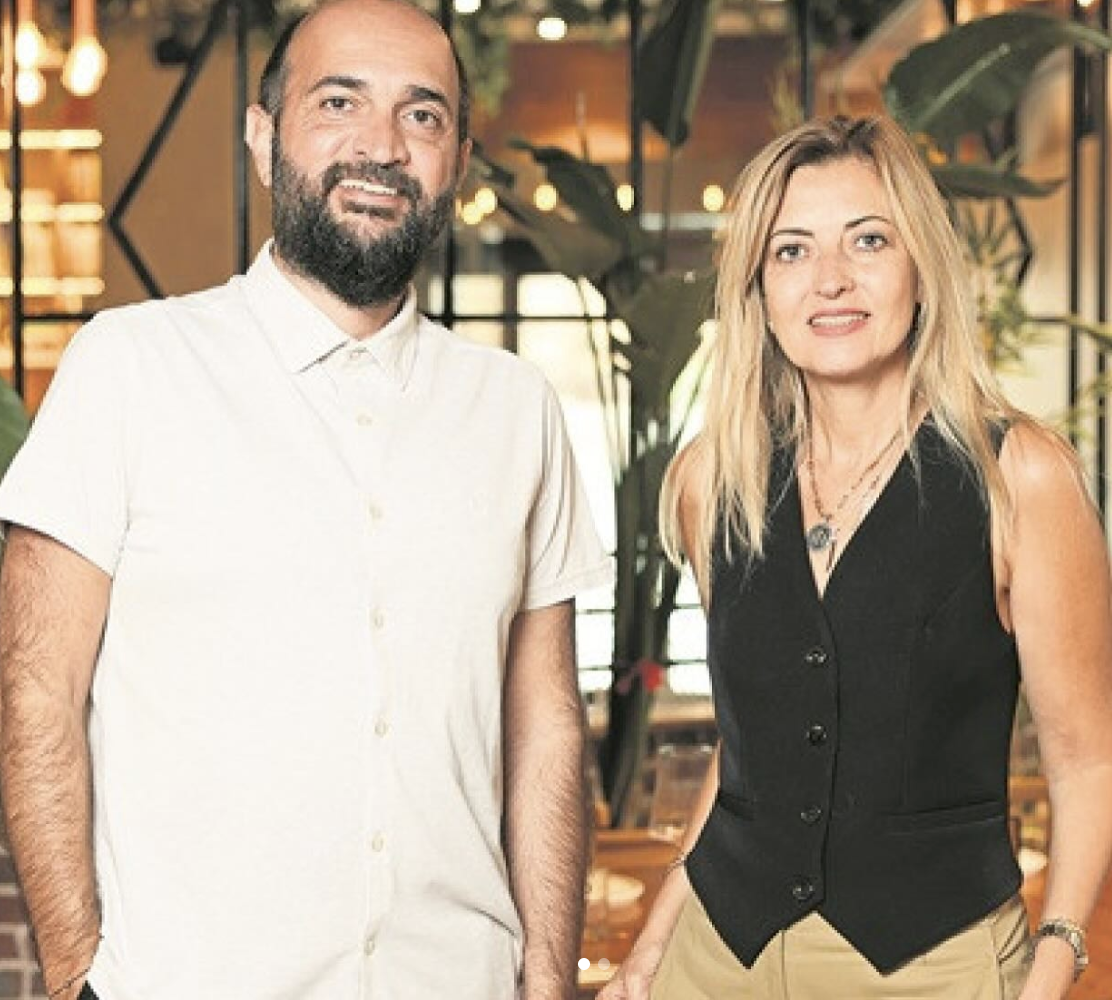
One of the young representatives of the gastronomy sector, Volkan Akkaş, started his journey in his twenties with a small tradesmen’s canteen he opened in the Industrial Zone and has today transformed it into a group comprising 14 brands and 61 restaurants.
One of the young representatives of the gastronomy sector, Volkan Akkaş, started his journey in his twenties with a small tradesmen’s canteen he opened in the Industrial Zone and has today transformed it into a group comprising 14 brands and 61 restaurants. His story, in fact, didn't begin with his own venture. From a very young age, he honed his skills alongside Köşebaşı’s founder—his father, Ali Akkaş—who elevated Istanbul’s kebab and “ocakbaşı” culture to sophisticated venues with high-quality service.
He learned every dimension of the business. In the catering sector, feeding over 100,000 people per day, entering the Michelin Guide under the Ali Ocakbaşı brand, and striving to establish sustainable gastronomy in Turkey under the Akkomarka umbrella—Akkaş now aims to expand internationally and present Turkish cuisine to the world authentically. We met with him at Usla Academy. We discussed both how the food and beverage sector is affected by the cost of living and the innovations in this industry.
You’re 41 years old. What kind of education did you receive? Can you tell us about how you entered the business world?
Actually, I started working with my father at a very early age. I pursued a double major in English Business Administration and Gastronomy at Yeditepe University, followed by a master’s in Marketing Communication at Marmara University. I’m married and have three children.
Your introduction to the business world happened very early. How were your first experiences?
Throughout high school, I worked with my father, Ali Akkaş. This continued during university. I served as cloakroom attendant at Köşebaşı’s Cadde branch. Later, I became involved in procurement, administrative affairs, and delivery services. I also tried waitering, but it didn’t suit me. That’s when I realized I wouldn’t find a lasting place for myself at Köşebaşı. That realization pushed me toward other ventures.
How did you establish your first business?
In my second year at university, I and a friend took over a tradesmen’s canteen in the IMES Industrial Zone. That’s where my entrepreneurial journey began. But it wasn’t very successful. It taught me a lot—nothing is as it seems from the outside.
Hüsnü Özyeğin gave you your break.
The number of top-segment customers declined. Those who went to fine dining restaurants decreased, shifting toward the mid-segment. As the clientele who used to frequent very luxurious places decreased, they started coming to places like Köşebaşı.
As the CEO of Akkomarka Restaurant Group—home to 14 brands including Köşebaşı—and Aziz Ebay Holding, Volkan Akkaş complains about costs:
“Energy, raw materials, rent, and personnel expenses have risen. Prices have surpassed Europe.”
“The cost of living negatively affects the restaurant business; those who used to go out three times a month now go out only once; alcohol consumption has decreased. There’s a shift from luxury segment to mid-segment restaurants. We’re also feeling a noticeable decline in foreign guest arrivals for business purposes.”
How are the meals prepared? Central kitchen or local production?
Everything is cooked on-site. We carefully establish our own kitchen at each establishment. Essentially, each one operates like a restaurant. And this makes a big difference.
How did the transition into restaurant operations happen?
We had a dream since childhood. We wanted to realize the ambitions our father used to share—ones he hadn’t been able to fulfill due to the scale of Köşebaşı. In 2013, with my brother, we opened Ali Ocakbaşı in Karaköy, named after our father, Mr. Ali.
You brought Ocakbaşı to Amsterdam and Barcelona.
The first branch made a splash. We then opened branches in Amsterdam and Barcelona. Today, Ali Ocakbaşı has reached six branches—four in Turkey, one in Amsterdam, one in Barcelona. We also became the first ocakbaşı to enter the Michelin Guide last year.
You didn’t stop at Ali Ocakbaşı but diversified. How did you plan that?
With the experience from Köşebaşı and Ali Ocakbaşı’s success, we asked ourselves, “Why not create different brands?” That’s how our diversification strategy began: we developed different concepts like Pam, Snoop, Mr. Meat. Our core strategy was to spread Turkish cuisine correctly around the world. Today, Akkomarka Restaurant Group encompasses 14 brands with a total of 61 restaurants.
How are the restaurants distributed?
Of the 61 restaurants, 50 are in Turkey, and 11 are abroad. We have five branches in Europe. We’re in the Netherlands, Spain, Azerbaijan, and Uzbekistan. Before the end of this year, we’ll open two more restaurants in London—one in Chelsea and one in Holborn. Our subsequent target is Miami.
Then you moved into the catering business—right?
Yes. I entered the industrial catering business in 2007. I saw the potential in this area and decided to dedicate all my energy to it, and it became a turning point. My first client was Hüsnü Özyeğin.
How large is your catering business today?
Currently, we serve lunch to over 100,000 people per day. We operate in 18 cities and two countries (Turkey and Azerbaijan). Our major clients include Coca‑Cola Company, Sabancı University, Ikea, Borusan Holding, and Novartis.
You flew on your own wings in the beginning—you proved yourself. Later, your father’s creation Köşebaşı also came under the same umbrella, didn't it?
In 2019, Köşebaşı was incorporated into Akkomarka. Today, there are a total of 21 Köşebaşı branches—6 of them are abroad, all via franchise. In Turkey, half of the branches are owned by us, and the rest are franchises.
How is your ownership structured?
Seventy-six and a half percent of Akkomarka is owned by my brother and me. Fourteen and a half percent belongs to Kıvılcım Kocabıyık, and the remaining nine percent is owned by my father’s business partner from the Köşebaşı founding days. Our father, Mr. Ali, doesn’t hold direct ownership, but the entire structure is his legacy.
I believe this process has been an immense source of pride for Mr. Ali. And you didn’t limit yourself to the food service industry—you entered other sectors too…
That’s right. The structure we built is called Aziz Ebay Holding. “Aziz” is my grandfather’s name. “Ebay” comes from the initials of my children’s names. Our goal is to create Turkey’s first sustainable gastronomy organization. We’re going beyond classical gastronomy by incorporating elements such as soil, energy, education, software, and waste transformation into our work.
In which areas are you active?
We operate in five main sectors: catering, restaurant operations, energy (we have our own solar energy investments), education (gastronomy education with Usla Academy), and technology (reservation and customer management systems).
What strategy do you follow in energy?
We have a solar power plant with a capacity of 2.7 megawatts in Sivas. We meet all our holding’s energy needs from it. We also sell the surplus to the government. We plan to invest more, but current regulations limit production to self-consumption. If this barrier is lifted, we’ll continue investing.
Your aim is to train conscientious chefs.
Yes. We restructured Usla Academy. We’re focusing not only on technical skills but also on environmental consciousness, ethical values, and geographically indicated products. Our goal is to train contemporary, conscientious chefs who recognize local ingredients. We have a strong cadre of instructors, training qualified talent both for the sector and for our own businesses.
How has this cost-of-living scenario affected you?
We tried to protect the customer regarding pricing, sacrificing profit. In the past six months, our customer numbers dropped by 2.5%, spending per person decreased by 0.5%, and profitability decreased by 5%. In other words, we didn’t lose customers, we sacrificed profit.
Which expense categories increased the most?
Energy is in first place, followed by food costs, rent, and then personnel. There have been very serious increases especially in energy and raw materials.
Why did Turkey become expensive?
We now price menus at 85–90 euros here, whereas we serve them at 60 euros in Europe. We can see this stark difference very clearly internally.
Wasn’t it the opposite before?
In Turkey, prices in euro terms were always around 40% below Europe until before the pandemic. With the pandemic, they first caught up with Europe, and now they have surpassed it. Unfortunately, costs in Turkey have risen tremendously.
Food procurement security is also critical. What system have you built?
After the pandemic, we became much more sensitive about this. For fruits and vegetables, we go all the way to the producers. For meat, we personally inspect the farms where the animals are raised. Our own quality teams go into the fields, farms, and warehouses, and conduct monthly audits of all suppliers. This has become one of the most important differentiating factors for us in the sector.
You also had a production initiative in your father’s hometown, Sivas, right?
Yes. We produce our own salt, spices, and honey in Sivas. It’s not a very large production; it mostly meets our own needs. But there’s also a social responsibility aspect. We contribute to the region and create employment.
How have your customers’ preferences changed during this period?
The biggest drop is in alcohol consumption, due to sharply increased taxes. When people go out, they still enjoy food experiences like kebab, sushi, or hamburgers, but they consume their drinks at home. Also, their frequency of going out has decreased: people who used to go out three times a month now go out once or twice.
How about tourists’ interest in your restaurants?
We’ve experienced a decline in business travelers. We feel this most acutely at our restaurants along the Bosphorus in Istanbul and near hotels. There’s a decrease in corporate visitors, rather than leisure tourists.
Source: